

Every homeowner encounters moisture issues at some point. A bit of condensation on windows in winter is normal. But there’s a significant difference between minor, manageable moisture and a genuine damp problem that requires professional diagnosis and treatment.
Knowing when to call in a specialist can prevent serious damage to your property — both by catching problems early and by avoiding wasted effort on DIY treatments that don’t address the root cause.
Warning Signs That Need Professional Assessment
1. Persistent Musty Smell
A damp, musty odour that lingers despite cleaning and ventilation is one of the most reliable indicators of a hidden moisture problem. This smell comes from mould and mildew growing in areas you might not be able to see — behind walls, under floors, or in cavity spaces.
When to worry: The smell persists even after thorough cleaning, or it’s concentrated in specific rooms or areas of the house.
2. Visible Mould That Keeps Returning
Small patches of mould in bathrooms can usually be managed with proper ventilation and regular cleaning. But if mould keeps coming back after treatment, or appears in unusual locations, there’s likely an underlying moisture source that needs addressing.
Red flags:
- Mould on bedroom walls or ceilings (not just bathrooms)
- Mould behind furniture that you only discover when moving things
- Black mould that regrows within weeks of cleaning
- Mould appearing in multiple rooms simultaneously
3. Peeling Wallpaper or Bubbling Paint
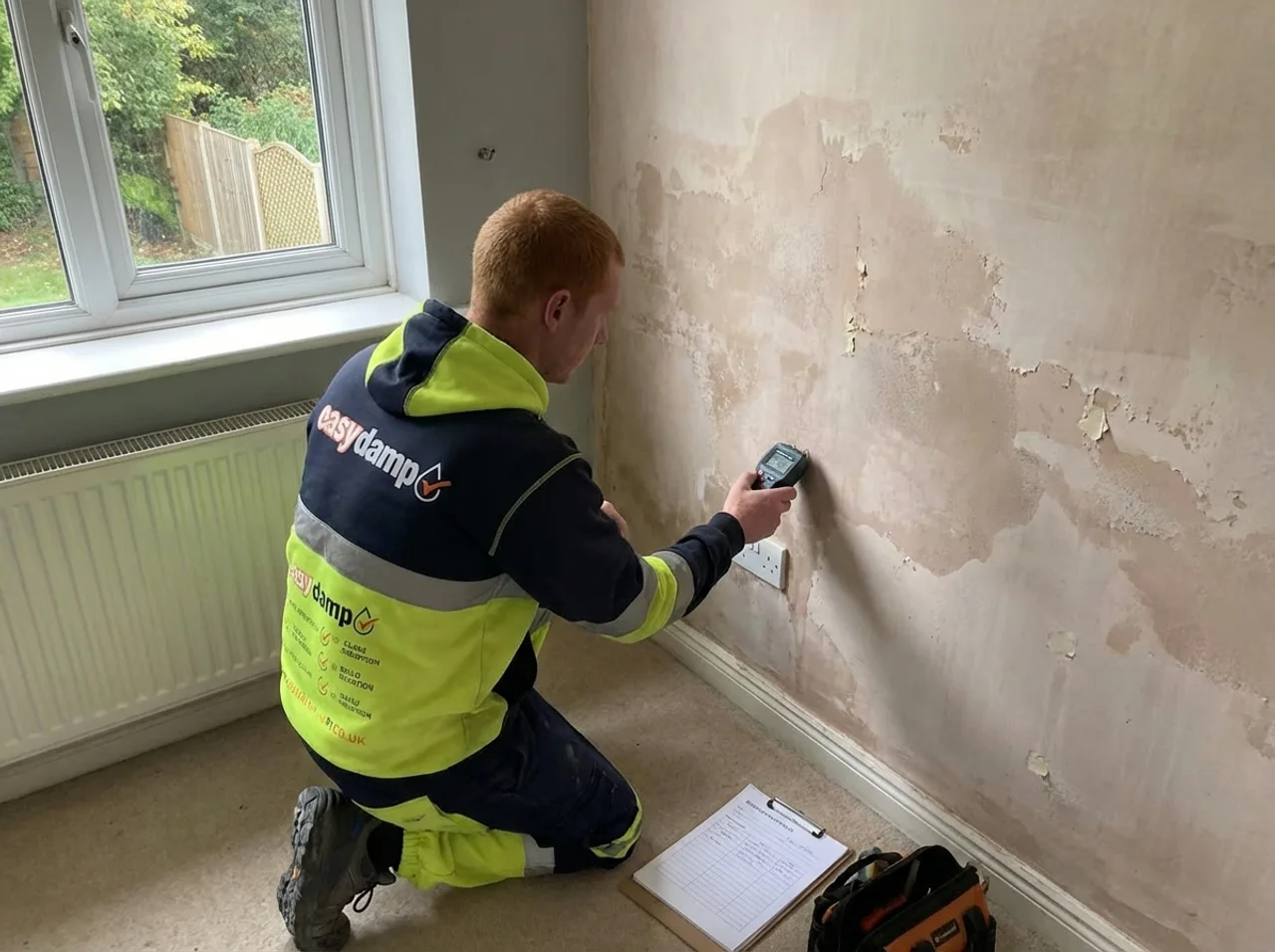
Moisture behind wall finishes causes adhesives to fail and paint to lose its bond. If you notice wallpaper peeling away from the wall, paint bubbling or flaking, or plaster becoming soft and powdery, there’s excess moisture in the wall.
Important: Simply redecorating over these symptoms is a waste of money. The moisture will destroy the new finish just as it did the old one.
4. Salt Deposits on Walls
White, crystalline deposits on brickwork or plaster (called efflorescence) indicate that water is moving through the wall and evaporating on the surface, leaving dissolved salts behind. This is a strong indicator of rising damp.
5. Damp Patches on Walls
Obvious damp patches — whether dark, stained, or visibly wet — clearly indicate a problem. The key diagnostic information is:
- Where on the wall the patches appear (base, middle, around windows)
- When they appear (constant, or only during/after rain)
- How many walls are affected
This information helps a surveyor quickly identify whether you’re dealing with rising damp, penetrating damp, or condensation.
6. Timber Damage
Damp creates conditions for timber decay, including:
- Wet rot — timber feels soft, spongy, and may be discoloured
- Dry rot — despite the name, dry rot requires moisture to start. Look for cracking timber, a mushroom-like smell, and red-brown spore dust
- Woodworm — some species of woodworm prefer damp timber
If you notice any deterioration in timber — floor joists, skirting boards, window frames, or structural timbers — a damp survey should be a priority.
7. Cold Walls or Floors
Walls that feel noticeably cold to the touch, even when the room is heated, may contain moisture. Damp walls lose heat up to three times faster than dry walls, which is why damp rooms often feel cold regardless of how high you set the thermostat.
8. Increased Heating Bills
Connected to the point above — if your energy bills are rising despite no change in usage, damp walls could be the reason. The thermal efficiency of a damp wall is dramatically reduced, meaning your heating system works harder to maintain temperature.
9. Buying or Selling a Property
A professional damp survey is essential when:
- Buying a property — particularly older properties or those that have been empty
- Selling — addressing damp proactively prevents it becoming a price negotiation issue
- A mortgage surveyor has flagged potential damp issues
- The property is pre-1920 and may not have an effective DPC
What Happens During a Professional Damp Survey
Understanding the process helps you know what to expect and what you’re paying for.
Visual Inspection
The surveyor examines the entire property — internal and external — looking for visible signs of damp, structural issues, and potential moisture pathways. This includes:
- External walls, pointing, render, and DPC
- Gutters, downpipes, and drainage
- Internal walls, floors, and ceilings
- Timber condition
- Ventilation provision
- Below-ground spaces (cellars, crawl spaces)
Moisture Measurement
Professional surveyors use calibrated instruments:
- Electrical moisture meters — measure moisture content in walls at various heights and depths
- Calcium carbide meters — provide highly accurate moisture readings (considered the gold standard)
- Hygrometers — measure relative humidity in the air
- Thermal imaging cameras — identify cold spots and hidden moisture patterns
Diagnosis and Report
A thorough survey results in:
- Clear identification of all damp types present
- Root cause analysis — not just the symptoms, but what’s causing them
- Recommended treatments specific to each issue
- Priority guidance — what needs urgent attention vs. what can wait
- Recommendations for any necessary remedial works
A good damp surveyor will never recommend work that isn’t necessary. If your “damp problem” turns out to be manageable condensation, an honest surveyor will tell you that — and advise you on ventilation improvements instead of selling you unnecessary treatment.
DIY vs Professional: When to Do Each
You Can Probably Handle It Yourself If:
- You have condensation on windows that clears when you improve ventilation
- There’s minor mould in the bathroom that responds to cleaning and better extraction
- You can see a clear, simple cause — like a leaking gutter that you can repair
You Need a Professional If:
- Damp persists despite good ventilation and heating
- You can’t identify the source of the moisture
- There are signs of rising damp (tide marks, salt deposits)
- Timber is deteriorating anywhere in the property
- You’re in a pre-1920 property without a known DPC
- The problem involves below-ground spaces
- You’re buying or selling and need formal documentation
Book Your Survey
If any of the warning signs in this article sound familiar, don’t ignore them. Early intervention is always cheaper than remediation.
Easy Damp provides comprehensive damp surveys across Greater Manchester and the North West. Our qualified surveyors will identify every issue, explain your options in plain English, and provide a clear, no-obligation quote.
Call us on 0161 527 6777 or book a survey online.
