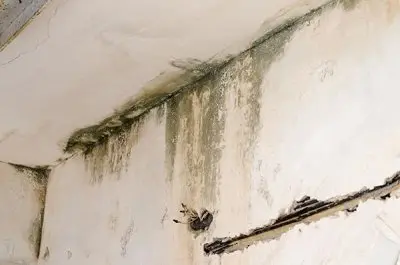

Rainwater damage often manifests internally, leading to damp patches on walls and ceilings and decay of timber skirting boards and panelling, primarily if the wetting is concentrated and prolonged. Longstanding issues may reveal concealed timber rot, such as in roof truss bearings beneath parapet gutters, during repair or after a comprehensive survey.
To avoid rainwater damage, inspect water services during rainy periods for faulty joints, cascading water (indicating blocked guttering), and other visible issues, enabling timely preventive actions.
Rainwater damage becomes evident within the living spaces of the property, primarily affecting the upper parts of the building. This can lead to disintegrated plastering, causing the interior walls to crumble and appear dilapidated. Additionally, the timber used in the structure may start to rot, posing an increased safety risk to occupants.
Rainwater damage typically originates from external defects, such as inadequate guttering, poorly pointed bricks, failing or insufficient damp proofing, gaps in rendering, and improperly draining overflows. This can result in algae growth and eroded mortar joints in external masonry, leading to the spalling of brickwork and stonework and damage to wall ties. Water penetration through hairline cracks in an inappropriate cement-based render can cause local failure. Wet rot may affect external joinery due to leaks above doors and windows, while blocked gullies can lead to water buildup and damage to foundations. Lack of regular maintenance may cause gutters, downpipes, and gullies to become clogged with leaves, moss, or debris.
Regular maintenance is crucial in preventing rainwater damage. This involves clearing rainwater fittings, especially after autumn leaves fall, and inspecting the system for defects. Periodic redecoration of ironwork is necessary to inhibit corrosion or rot. Consider fitting plastic leaf guards to gutters or wire balloons above downpipes for added protection. However, note that leaf guards may still admit pine needles and can sometimes be easily dislodged, and material around wire balloons might cause blockages. If visually acceptable, introduce overflow pipes above hopper heads.
Rainwater damage refers to the harmful effects of water infiltration due to defects in external areas of the property. It is often noticed internally through damp patches on walls and ceilings and decay of timber skirting boards and panelling.
Concentrated and prolonged wetting can exacerbate rainwater damage, causing more significant problems such as the disintegration of plastering and the appearance of dilapidation in interior walls.
During repairs or comprehensive surveys, concealed timber rot, such as in roof truss bearings beneath parapet gutters, may be uncovered due to longstanding rainwater damage
To prevent rainwater damage during rainy periods, inspect water services, look for faulty joints, and observe cascading water, which could indicate blocked guttering. Promptly addressing these visible issues can prevent further damage.
Rainwater damage can lead to disintegrated plastering, crumbling interior walls, and rot in timber used in the structure, posing safety risks to occupants.
Rainwater damage typically originates from external defects, including shoddy guttering, poorly pointed bricks, inadequate damp proofing, gaps in rendering, and poorly draining overflows.
Water penetration can lead to algae growth and eroded mortar joints in external masonry, causing spalling of brickwork and stonework, as well as damage to wall ties.
Regular maintenance is essential to prevent rainwater damage. This includes clearing rainwater fittings after autumn leaves fall, inspecting the system for defects, and periodically redecorating ironwork to inhibit corrosion or rot.
Consider fitting plastic leaf guards to gutters or wire balloons above downpipes for added protection against debris. Overflow pipes introduced above hopper heads can also be beneficial if visually acceptable.


