

Energy efficiency and damp are two of the biggest concerns for UK homeowners — but most people don’t realise how closely connected they are. Improving one without understanding the other can create serious problems, and the relationship between moisture and thermal performance is more nuanced than many builders, insulation installers, and even some surveyors appreciate.
Here’s what you need to know to get the balance right.
How Damp Walls Lose Heat
A dry brick wall insulates reasonably well. A damp one does not. Moisture in masonry dramatically increases heat loss because water conducts heat around 25 times more effectively than still air.
When walls are damp, you experience:
- Higher heating bills — you’re heating the wall as well as the room, and the heat escapes faster
- Cold internal surfaces — damp walls feel cold to the touch, which in turn causes condensation as warm indoor air meets the cold surface
- Reduced insulation effectiveness — if insulation material becomes damp, its thermal performance drops significantly. Wet mineral wool, for example, loses most of its insulating value.
This creates a vicious cycle. Damp causes heat loss, which causes cold surfaces, which causes more condensation, which causes more damp. Breaking the cycle requires addressing the moisture problem first.
How Energy Efficiency Measures Can Cause Damp
This is the part that catches many homeowners off guard. Well-intentioned improvements to your home’s energy efficiency can actually introduce or worsen damp problems if they’re not done with moisture in mind.
Sealing Homes Too Tightly
Older UK homes were designed to breathe. Draughts around windows, doors, chimneys, and suspended floors provided constant background ventilation that carried moisture out of the building. When you seal these gaps — draught-proofing windows, blocking chimneys, filling gaps around doors — you reduce heat loss, but you also trap moisture inside.
The moisture you generate daily through cooking, bathing, drying clothes, and simply breathing has to go somewhere. In a well-ventilated older home, it escapes naturally. In a sealed-up home, it condenses on cold surfaces.
Blocking Air Bricks
Air bricks ventilate the void beneath suspended timber floors and help prevent moisture build-up in sub-floor spaces. Homeowners sometimes block these — intentionally to reduce draughts, or accidentally when rendering, landscaping, or raising external ground levels.
Blocking air bricks can lead to stagnant, moisture-laden air beneath the floor, increasing the risk of timber decay, fungal growth, and rising damp.
Internal Wall Insulation Done Badly
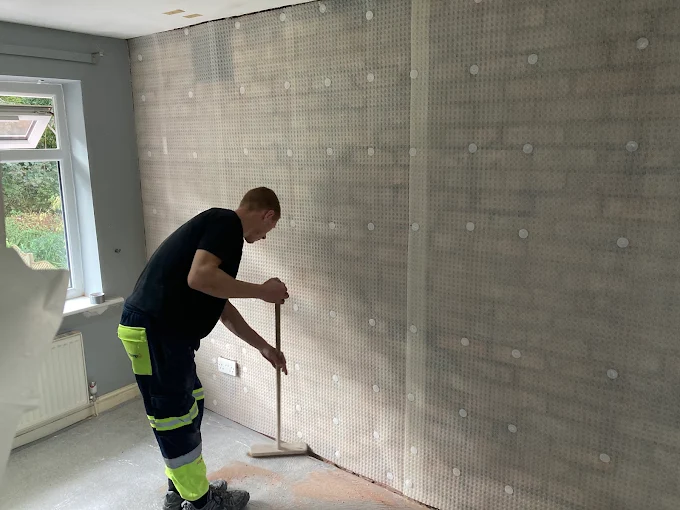
Internal wall insulation (IWI) is a popular retrofit measure for solid-walled homes that can’t have cavity wall insulation. When installed correctly, it works well. When installed without proper consideration of moisture, it can be disastrous.
The problem: IWI moves the dew point (the temperature at which moisture in the air condenses) into the wall structure. Warm, moist indoor air can penetrate behind the insulation, condense on the now-cold original wall, and cause hidden damp and mould that you won’t see until it’s caused serious damage.
A vapour control layer on the warm side of the insulation is essential, and any existing damp problems must be resolved before insulation is installed.
Cavity Wall Insulation in the Wrong Conditions
Cavity wall insulation can cause penetrating damp in exposed locations — particularly on walls that face the prevailing rain (typically the west-facing elevation in the UK). The insulation can bridge the cavity, allowing rainwater that penetrates the outer leaf to transfer across to the inner wall.
If your property is in an exposed position or has any existing moisture issues, cavity wall insulation needs careful assessment before it’s installed.
The Condensation Problem in Energy-Efficient Homes
Condensation is the most common form of damp in UK homes, and it’s more prevalent in energy-efficient homes than many people expect. Here’s why:
A modern, well-insulated, draught-proofed home retains heat effectively — but it also retains moisture. A typical family of four produces approximately 10 to 15 litres of moisture per day through normal activities: breathing, cooking, bathing, and drying clothes.
In an older, draughty home, much of this moisture escapes through gaps and ventilation. In a tightly sealed home, it stays inside. When this moisture-laden air meets any surface that’s below its dew point — a cold window, an external wall, a corner where air circulation is poor — it condenses.
The result: streaming windows, damp patches in corners, and mould growth behind furniture and in wardrobes against external walls.
Ventilation Is the Key
The solution to the condensation problem in energy-efficient homes is controlled ventilation — removing moist air and bringing in fresh air in a way that doesn’t undo your insulation investment.
Trickle Vents
Small vents built into window frames that provide continuous background ventilation without significant heat loss. These should never be taped shut or painted over.
Extractor Fans
Essential in kitchens and bathrooms — the two rooms that produce the most moisture. Modern extractor fans are quiet, energy-efficient, and can be set to run on a humidity sensor, activating automatically when moisture levels rise.
Positive Input Ventilation (PIV)
A PIV unit sits in the loft and gently introduces filtered, tempered fresh air into the home, creating slight positive pressure that pushes stale, moist air out through natural leakage points. PIV systems are one of the most cost-effective whole-house ventilation solutions and are particularly good at reducing condensation.
Mechanical Ventilation with Heat Recovery (MVHR)
The gold standard for energy-efficient ventilation. An MVHR system extracts moist air from wet rooms and supplies fresh air to living spaces, passing both streams through a heat exchanger that recovers up to 90% of the heat from the outgoing air.
MVHR systems are most effective in new builds or major renovations where the building envelope is well-sealed. In draughty older homes, they’re less efficient because air bypasses the system through gaps in the structure.
How to Improve Energy Efficiency Without Causing Damp
The good news is that you absolutely can make your home more energy-efficient without creating damp problems — you just need to approach it in the right order.
- Fix existing damp first. Before you insulate, draught-proof, or seal anything, address any existing moisture problems. A professional damp survey will identify the type and source of damp and recommend the correct treatment.
- Ventilate before you seal. If you’re draught-proofing or sealing your home, plan your ventilation strategy at the same time. Don’t reduce air leakage without providing an alternative ventilation route.
- Insulate with moisture in mind. Ensure any insulation installation includes proper vapour control and doesn’t trap moisture within the building fabric. This is particularly important with internal wall insulation and retrofit projects.
- Maintain air bricks and sub-floor ventilation. If you have suspended timber floors, keep air bricks clear and unobstructed at all times.
- Monitor humidity. A simple hygrometer (available for a few pounds) tells you the relative humidity in each room. Aim for 40 to 60% relative humidity. Anything consistently above 70% is a problem.
The Cost of Ignoring Damp on Your Energy Bills
Damp walls don’t just damage your property — they cost you money every single day. A damp wall can lose heat at up to three times the rate of a dry one. If your heating bills seem disproportionately high despite insulation and double glazing, hidden damp could be the reason.
Treating the damp and allowing walls to dry out can deliver a measurable reduction in heating costs, sometimes within weeks. It’s one of the most cost-effective energy efficiency improvements you can make — yet it’s rarely mentioned alongside loft insulation and boiler upgrades.
Get the Balance Right
At Easy Damp, we see the consequences of poorly considered energy efficiency work regularly — condensation problems, hidden damp behind new insulation, and mould growth in homes that have been sealed up without adequate ventilation.
If you’re planning energy efficiency improvements, or if you’ve already made changes and are now seeing damp or condensation you didn’t have before, a professional damp survey is the essential first step. We’ll identify exactly what’s happening, explain why, and recommend a solution that addresses both the damp and your energy efficiency goals.
Book a damp survey with Easy Damp today, or call us on 0161 527 6777. We cover Greater Manchester and the North West, and our surveys are thorough, honest, and obligation-free.
